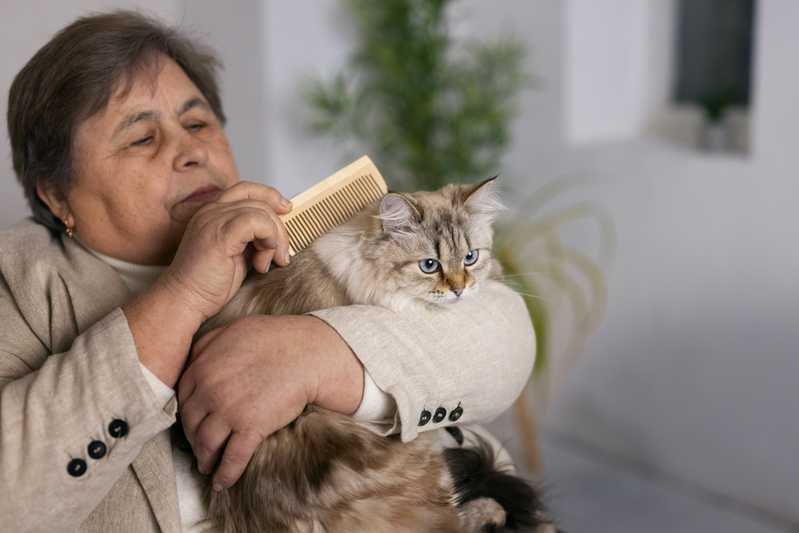
How to Care for a Senior Cat
As cats grow older, they slow down — not just in their movements, but in their habits, their curiosity, and sometimes even in their appetite for affection. Yet, this is when they need us most. Caring for a senior cat is about patience, presence, and small acts of comfort that say, “You’re still my companion, my muse.”
1. Create a Comfort Zone
Older cats appreciate warm, quiet corners. A soft bed near your desk or by the window gives them a familiar spot to nap while staying close to you. Keep their essentials — food, water, and litter box — on one floor if possible, to reduce strain on their joints.
2. Adjust Their Diet
Senior cats often need food that’s gentle on the stomach and rich in nutrients that support aging bones and kidneys. Ask your vet about switching to a senior formula or wet food that keeps them hydrated and satisfied.
3. Stay Gentle and Observant
Watch for small changes: less grooming, avoiding favorite perches, or sleeping in new places. These can signal discomfort or illness. Regular vet visits — even just twice a year — can make a big difference.
4. Keep Them Engaged
Play doesn’t stop with age; it just slows down. A soft toy or gentle laser light keeps their mind active. Sometimes, the best playtime is simply your voice — talk to them, hum, or let them rest near your writing desk as you work.
5. Give More Time, Not Things
Senior cats value your attention far more than new toys or treats. Sit with them in silence. Let them purr against your leg while you read or write. Aging gracefully is easier when they feel seen and loved.
Caring for a senior cat is like caring for an old friend who has always been there. Their loyalty deserves the same gentle devotion in return.